Friday, September 13, 2019

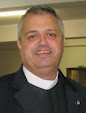
Baron Fain: A faithful friend and a friend of faith

Published in the September 2019 edition of the  Carolina Compass section of the Charleston Mercury.


by Charles A. Collins, Jr. 

(N.B., this ordinarily would have been posted here a month or more ago but since it was prepared for publication in the Carolina Compass I waited until that was published as a courtesy. -- DC)

      When Earl Fain IV, better known to most who knew him as “Baron,” died suddenly on July 31 it was a loss to many. His lovely wife Courtenay and fine son Tradd lost a devoted husband and loving father, many – myself included – lost a close and trusted friend, a host of fraternal, historical, and social organizations lost an enthusiastic member and active participant, and the Ben Silver Corporation – and I don't write this lightly – lost a great talent who was able to take his interest in heraldry, vexillology, and history and combine it with a keen eye and creative imagination to design items representing a host of schools, societies, and other organizations (on more than one occasion I complimented Baron on being able to take his interest in those fairly esoteric subjects and actually make a career out of working with them).
     My aim here, however, is not to examine Baron Fain as a husband, father, son, friend, etc., but rather to consider the relationship out of which all of those other relationships sprang, namely, his relationship with God through Jesus Christ.
     One thing that Baron and I had in common was the fact that we were raised Presbyterians and made a mature decisions to become Anglicans in our 20s, similarly attracted by the Reformed Catholicism of the Anglican way as well as the soundness and beauty of the classical Book of Common Prayer. I knew Baron only as a friend and never as a parishioner – he was never a member of a parish that I served –but would've counted it a pleasure to because he took his Christian faith seriously and had bothered to not only figure out what he believed but to know why he believed what he believed.
     I remember discussing the weekly Bible Study that he led with considerable enthusiasm. Baron enjoyed the opportunity to open up God's Word and discuss it with other men. When the ESV Study Bible came out I remember telling Baron about it and showing him my copy as well as the fact that purchase of it included electronic access and him being enthusiastic both at the quality of the tools provided but also with the possibilities to incorporate it into his teaching.
     Baron also took advantage of the opportunity to learn more about his faith and to take a stand for Christian orthodoxy. When changes were introducing themselves into The Episcopal Church in the early 2000s he drove out to Plano in early 2004 to attend the conference that would lay the groundwork for what would later become the Anglican Communion Network and finally the Anglican Church in North America. Baron was a frequent attendee at the conferences first known as SEAD, and later known as Mere Anglicanism and also enjoyed and participated in the conferences sponsored by the Prayer Book Society at St. John's Church, Savannah.
     And speaking of the Prayer Book Society, of which Baron was a longtime supporter and for which – not surprisingly – he designed a very handsome tie, my friend was an enthusiastic supporter of the classical Book of Common Prayer, most prominently represented in this country by the 1928 Edition ofthe Protestant Episcopal Church. Baron was a leader in the establishment of the 1928 Book of Common Prayer Morning Prayer service at St. Philip's Church – sometimes called the “Miserable Offenders” noting a theologically significant clause in the Prayer of General Confession that is sadly either omitted or watered down in later revisions –each Wednesday morning and would also regularly attend the 1928 Prayer Book Holy Communion service at the Cathedral Church of St. Luke and St. Paul at noon on Thursdays while that was still held; he sincerely wanted to support any offerings of 1928 Prayer Book worship that he could. When he and Courtenay were married it was out of the 1928 Book of Common Prayer, when Tradd was baptized it was out of the 1928 Book of Common Prayer and when Baron was laid to rest in August it was out of the 1928 Book of Common Prayer.
     Baron would be the first to tell you, though, that his preference for the 1928 Book of Common Prayer was not primarily aesthetic. Although he would freely admit that the attractiveness of that Liturgy was a tremendous drawing card for him the chief attraction remained its soundness and fidelity to earlier versions of the Book of Common Prayer. Baron counted it a joy to carry on that legacy.

In Deuteronomy we read:

"Hear, O Israel: The LORD our God, the LORD is one. You shall love the LORD your God with all your heart and with all your soul and with all your might. And these words that I command you today shall be on your heart. You shall teach them diligently to your children, and shall talk of them when you sit in your house, and when you walk by the way, and when you lie down, and when you rise” – Deuteronomy 6: 4-7 ESV

When Baron and Courtenay were blessed with a child of the covenant they took their responsibilities to raise Tradd up in the fear and admonition of the Lord seriously. He was baptized by his grandfather, the Rev'd Haden McCormick, and regularly brought to church to hear and and learn about God's Word but he was also instructed in what the Rev'd Dr. Jay Adams has called the milleu, taking advantage of everyday opportunities to train their son in the faith. In addition, every morning he was able from a very early age Baron would read Morning Prayer with his son,kneeling at a prie-dieu borrowed from his grandfather, thus imparting a spiritual discipline and love of God and his Word from a very early age in that young man's life.
     Baron Fain is gone – it still seems hard to believe. Nearly every day since then something has happened that I wanted to share with my friend or some point has come up about which I wanted to seek his counsel because he'd usually have the correct answer. While my email in-box continues to fill up there haven't been any of the regular reminders to fly this or that flag in commemoration of an oft little-known historical event (I used to reguarly tell him that he should publish Fain's Calendar of Obscure Observances),but his legacy will live on in a variety of ways: friendships formed, organizations participated in and in many cases founded, neckties designed, but most importantly in the faith implanted in his son which will bear fruit for many years to come. We must not grieve “...as others do, who have no hope. For since we believe that Jesus died and rose again, even so, God, through Jesus, will bring with him those who have fallen asleep.” (1 Thessalonians 4:13b-14 ESV). I give thanks for the life, faithful friendship, and lasting testimony of my friend.

     The Rev'd Charles A. Collins, Jr., is an Anglican priest who serves as Chaplain for an area hospice. He may be contacted at drew.collins@gmail.com


Wednesday, June 19, 2019

Thoughts on Russell Moore at the ACNA Assembly

The Rev'd Dr. Russell Moore, President of the Ethics and Religious Life Commission of the Southern Baptist Convention spoke on Tuesday, 18 June, to the 2019 Assembly of the Anglican Church in North America. I wasn't thrilled when I learned that he was scheduled to speak -- although I had at one time been a fan of Dr. Moore's some of his advocacy of social justice has been of serious concern, and not only for me but for many of my Southern Baptist friends -- and following his approbation for Resolution 9   which stated that Critical Race Theory and Intersectionality, concepts that had their roots in radical feminism and have been adopted by cultural Marxists, could, under the authority of Scripture serve as useful analytical tools, at last week's Southern Baptist Convention thought the he should be disinvited and stated so. I didn't really think that would happen, but still find question his participation and the imprimatur that his speaking appeared to give. I determined that I would listen to his remarks (which can be found here at 53:10) and so these are my thoughts.

I will say at the outset that there wasn't a whole lot in this address that I could disagree with. While he has been a vociferous and untiring critic of Donald Trump (an area which, in the interest of full disclosure, I largely agreed with him in 2016) he made no mention of the President. He criticized the notion that Christianity could be a "hood ornament" to Southern or Mid-Western culture and I would agree with him that if it is only that then that is largely problematic. At the same time, I would caution against too greatly depreciating the effects that Christianity formerly had on those cultures (as Flannery O'Connor pointed out the South is "Christ haunted") -- however imperfect. He noted that the notion, largely prevalent in society that one need be at least nominally associated with a church to be a good person, is passing away due to increasing secularism. He is correct. I remember asking an Englishwoman who had relocated to South Carolina from California in 1981 what church she attended and being somewhat surprised when she said that she didn't; in my work as a hospice chaplain I regularly meet new people and in the course of my conversation ask them about their religious affiliation and increasingly note that they answer the same way that she did so many years ago. 

He rightly noted that secularism can present opportunities for the Church to present a unique message to the culture and cautioned against being co-opted by either poltical party, telling a story of seeing a truck with a bumper sticker that read "If Jesus had a gun he'd still be alive today." I am an life member of the NRA, have a Concealed Weapons Permit, enjoy shooting, and am a passionate advocate of the Second Amendment but I find that sticker stupid and fairly blasphemous. He also noted that it would be an error to use the Church to advocate the opposing view as well, although that happens far more frequently. 

Somewhat out of nowhere he mentioned that the Church should be the kind of place where a person with Down Syndrome is treated not a a charity case but a valuable part of the body. I couldn't agree more. For 2 1/2 years while I was in seminary I served as the Student Supply (more or less the de facto minister, although not yet being ordained I had to bring in clergy for baptisms [we had some] and Holy Communion) at Waccamaw Presbyterian Church in Bucksport, South Carolina. One of the people that joined that small rural church (and I seem to recall him being baptized there) was a young man with Down Syndrome named Alvie. Alvie enjoyed ushering and so he did exactly that and did so with enthusiasm. During my time there the decision was made to clear out and repair the educational building and use it for that purpose and as a parish hall. One day the Clerk of Session (kind of the Senior Warden in Anglican parlance) walked in to find Alvie sanding the floorboards and when he asked him what he was doing Alvie responded that he was "working for Jesus." His simple but very real faith was an inspiration to the rest of us and I am thankful for it. Furthermore, inasmuch as I have often said that my philosophy of ministry is that as a cleric I am essentially a coach whose job it is to develop and enable the flock to minister as God has gifted them that certainly includes the handicapped. 

Moore's call to live out an authentic Christianity in the midst of a secularizing culture was a valid one. As I mentioned, there is little in this address with which I can disagree.
I still have serious concerns about Russell Moore, his adoption of the social justice agenda, and his approbation for a seriously flawed resolution and still wonder why my Province feels the need to cozy up to Big Eva. Whether that continues remains to be seen.  

Saturday, August 11, 2018

An Unofficial Cycle of Prayer for the Anglican Church in North America

The latest edition of this unoffical Cycle of Prayer for the Anglican Church in North America, offered to facilitate prayer for the Province, may be found here

Wednesday, July 25, 2018

Ecclesia Reformata, Semper Reformanda

When I was in my early 20s, finishing my undergraduate work at Coastal Carolina University  and pondering a call to ministry in the denomination of which I was a member at the time, the Presbyterian Church (USA), I often heard the phrase "A Reformed church always reforming." To be honest, I wasn't that impressed with the phrase and actually was a bit prejudiced against it because it invariably seemed to be used by revisionists to justify their newest theological fad -- thus making the faith of the Church a nose of wax rather than something once for all delivered to the saints (see Jude 3). 

I was reminded of that recently when reading an open letter by Mrs. Penn Hagood, Senior Warden of St. Philip's Church in Charleston regarding a series of "open conversations" held by the Rt' Rev'd  Gladstone B. "Skip" Adams III, Provisional Bishop of the Episcopal Church in South Carolina. As an aside, while not the prime focus of this post, I strongly encourage you to read Mrs. Hagood's letter, especially if you have read the official reports of those meetings -- I believe her account is far more accurate.  In her letter she mentions a remark that I missed by the Very Rev'd Sam Candler, Dean of the Cathedral of St. Philip in Atlanta, Georgia, at the most recent General Convention of The Episcopal Church in regards to "expansive language" liturgies that will address God in new ways (namely avoiding the male imagery that has been traditionally [and Scripturally] used to refer to the Persons of the Godhead). Dean Candler remarked, "The church is always reforming. Our prayer is always reforming. I'm excited to be a part of that."

Well, I didn't like the slogan used by Presbyterian revisionists and I don't much care for it when used by Episcopal revisionists either.

But what a difference 25 or so years, seminary, and some reading makes. You see, the slogan has a long history and curiously it gets severely truncated most of the times it's used today. It first appears in a 1674 devotional by  Jodocus van Lodenstein, a Dutch Reformed pietist. The full quotation is 'The church is reformed and always being reformed according to the Word of God." Far from being a nose of wax, what van Lodenstein was actually championing was a constant Berean spirit (see Acts 17:11-12) whereby the church is taken back to the Scriptures and those things out of accord with God's Word are reformed and brought into conformity therewith.

It's a good slogan and a great concept, one expressed well in the Prayer for The Church found in the Book of Common Prayer:
O GRACIOUS Father, we humbly beseech thee for thy holy Catholic Church; that thou wouldst be pleased to fill it with all truth, in all peace. Where it is corrupt, purify it; where it is in error, direct it; where in anything it is amiss, reform it. Where it is right, establish it; where it is in want, provide for it; where it is divided, reunite it; for the sake of him who died and rose again, and ever liveth to make intercession for us, Jesus Christ, thy Son, our Lord. Amen.

By God's grace may the Church always reform itself under the guidance of the Scriptures and the Holy Spirit who inspired them, but if I never hear von Lodenstein's quote mangled again it won't be too soon. 

Tuesday, July 10, 2018

Pray and Let Your Voice be Heard for Andrew Brunson

by Charles A. Collins, Jr.
(Published in the July 2018 edition of the Carolina Compass section of the Charleston Mercury .)
     If he has not been released by July 1 the Rev'd Dr. Andrew C. Brunson, a missionary of the Evangelical Presbyterian Church in Turkey, will have been imprisoned in that country for 632 days. Dr. Brunson, who grew up as the son of an Associate Reformed Presbyterian missionary family that served in Mexico, Pakistan, and Russia and whose father also taught at Montreat College in North Carolina, is a graduate of Wheaton College who received the Master of Arts from Trinity Evangelical Divinity School, the Master of Divinity from Erskine Theological Seminary, and later competed the Doctor of Philosophy from the University of Aberdeen and has served as a missionary in Turkey since 1993, first under the auspices of World Witness, the Foreign Missions Board of the Associate Reformed Presbyterian Church and later with the Evangelical Presbyterian Church. He and his wife Norine, who was originally arrested with him but was released after thirteen days, raised their three children there and at the time of his arrest had applied for permanent resident status; he was serving as the Pastor of the Izmir Resurrection Church, a small congregation in Turkey's third-largest city. He has also been involved with theological education in that country.

     So what gives? Why has the missionary pastor of a small congregation been detained for so long by the Turkish government in a country that, while overwhelmingly Muslim, is officially secularized and is a longstanding member of NATO? His detention is part of a much larger purge following an attempted July 2106 failed coup d'état in which an estimated 160,000 Turkish military personnel, civil servants, and private citizens have been detained. Specifically he has been accused of being related to the Gülen movement, which has been alleged to have played a role in the coup.

    For his part, Dr. Brunson has denied any connection to to movement, stating “I am not a member of an Islamic movement. I have never seen any member of FETO (the Gülen movement) in my life.” In April he had a court appearance that was attended by Ambassador Sam Brownback, the United States' Ambassador-at-Large for International Religious Freedom, and Senator Thom Tillis (R-NC) (Dr. Brunson's hometown is Black Mountain, North Carolina) in which he stated in Turkish that “I have been praying for Turkey for 25 years. I wouldn't do anything against Turkey.” If convicted, he faces the possibility of a sentence ranging anywhere from 35 years to life. Both the Ambassador and the Senator expressed their belief (in Ambassador Brownback's case shared by the Trump Administration) in Dr. Brunson's innocence. The charges against him are based on accusations from two unnamed sources and evidence reportedly procured from his telephone.

     The Turkish government has repeatedly offered to free Dr. Brunson in exchange for the extradition of Fethullah Gülen, for whom the movement is named, who current resides in Pennsylvania and has lived in the United States since 1999. That offer raises serious doubts about whether there is any validity in the charges or if the missionary is being used by the Turkish government as a political pawn.

Andrew Brunson's next scheduled court appearance is on July 18. What can readers do to assist him?
–First and foremost, lift him and his family up the the Lord in prayer.
– If one is led, contact your Senators and Congressmen and ask them to support Dr. ```````` Brunson's release.
– The American Center for Law andJustice has been active in working for his release
and has prepared a petiton to that end. It may be accessed and signed at:
-- Finally, readers can keep apprised of the latest developments in the case by following the online resource developed by his mission board at:
     
     Hopefully, by God's grace, Andrew Brunson will soon be reunited with his family and a free man.

The Rev'd Charles A. Collins, Jr. is an Anglican priest currently serving as a hospice chaplain in the Charleston area. He may be contacted at drew.collins [at] gmail.com


Thursday, March 8, 2018

Billy Graham's Lasting and Far-reaching Legacy


by Charles A. Collins, Jr.
Published in the March 2018 issue of the Carolina Compass section of the Charleston Mercury
.The years of our life are seventy, or even by reason of strength eighty....” – Psalm 90:10 (ESV) In light of the Psalmist's observation, the death of Billy Graham on the morning of Wednesday, February 21, was not entirely surprising as he had attained the age of 99 – a matter of months shy of five score years – but for those of slightly less than my age and older it marked the passing from life's stage of someone who had always been prominent and respected and who had preached the Gospel to more people than any other individual in the history of the Church.


William Franklin Graham, Jr., was born on November 7, 1918 in Charlotte, North Carolina. While hard to imagine in light of Charlotte's present image as a New-South metropolis, the Queen City in those days was a much smaller city of some 46,000 in his youth and he grew up on a working dairy farm, milking his father's cows each morning and evening. The Scotch-Irish Grahams were members of Chalmers Memorial Associate Reformed Presbyterian Meeting House (a church to which the mother of Bishop John Shelby Spong – whose theology markedly differed from Graham – also had family connections) in his youth and later joined the BiblePresbyterian Church. As a teenager Graham was turned down for membership in a youth group for being “too worldly,” and at the behest of one of the workers on his father's farm went to hear revivalist Mordecai Ham. He underwent a profound conversion at age 16 and sensed a call to preach the Gospel.

After graduation from Sharon High School Graham first attended Bob Jones College, then located in Cleveland, Tennessee. He found the college too legalistic and, Bob Jones, Sr. wasn't terribly impressed with him either, warning him not to throw his life away and famously telling him “At best, all you could amount to would be a poor Baptist preacher somewhere out in the sticks.... You have a voice that pulls. God can use that voice of yours. He can use it mightily.” Graham later transferred to FloridaBible Institute and finally to Wheaton College in Wheaton, Illinois where he graduated with a bachelor's degree in anthropology.

Far more significant than the education that he received at Wheaton was his experience in meeting the pretty daughter of a Presbyterian medical missionary to China, Ruth Bell, whom he married in 1943. Upon graduation he served briefly as Pastor of the First Baptist Church of Western Springs, Illinois (along with a church that he had served while a student at Wheaton, the only two pastorates that he ever held), and then became President of Northwestern Bible College in Minneapolis – at the age of 30, he was the youngest college president in the country.

In 1949, while still President of Northwestern Bible College, Graham conducted a series of revivals in the circus tent in Los Angeles that attracted national attention, aided by newspaperman William Randolph Hearst who famously told his reporters to “puff Graham.” The crusade ran for eight weeks – five longer than planned – and while not the first of more than 400 that he was to conduct in more than 185 countries on six continents it attracted national attention. His preaching was simple – he often stated that he preached the same message over and over again for 60 years – calling sinners to repent and believe on Jesus Christ.

In the Spring of 1954 Billy Graham preached an extended crusade in London, England. The then-Archbishop of Canterbury Geoffrey Fisher participated and he attracted the attention of a young Queen Elizabeth, who met with him and invited him to preach in her private chapel. The most recent season of The Crown (an excellent series, by the way), dramatizes their meeting with Her Majesty's desire to be “a simple Chrisitian.” Their friendship lasted for the rest of his life and in 2001 he was made an honourary Knight of the British Empire. The effects of that crusade were far-reaching – Michael Baughen, who later became the Bishop of Chester, described it as “divine adrenalin for a jaded church” and a number of Evangelical clergy and lay leaders in the Church of England and other churches noted the profound impact of those gatherings in their lives.

Billy Graham was also a trendsetter in civil rights. While not actively participating in marches he integrated his crusades at a time when doing so was a-typical. He was also a leader in the Laussanne Covenant, which challenged Christians to world evangelization. Known as the “Pastor to Presidents,” he advised every U.S. President from Harry Truman to Barrack Obama.

He lived more than 60 years in the public eye and managed to avoid personal or financial scandal in doing so. One of the ways in which he did so was his practice of not spending time alone with any woman except for his wife, the so-called “Billy Graham Rule” that was recently in the press when it was revealed that Vice President Mike Pence follows the same practice.

This writer never had the privilege of meeting Billy Graham but did spend the first six and a half years of his life in Black Mountain, North Carolina, near Graham's longtime residence in Montreat. Ruth Graham occasionally shopped in the Collins Department Store in Black Mountain, managed by my father, and Billy Graham came into the store on at least one occasion. In the autumn of 1994 Billy Graham conducted a crusade in Atlanta and since the evangelist was then 75 years old I, in my first year at ErskineTheological Seminary, figured that it might be my last chance to see him so I headed off to Atlanta on a Wednesday afternoon after Greek class and got to see him in the Georgiadome. He would, of course, go on to live nearly another quarter century.

I give thanks for the life and monumental ministry of the Rev'd Dr. Billy Graham, KBE.


The Rev'd Charles A. Collins, Jr., is an Anglican priest currently serving as Chaplain for a local hospice. He may be contacted at drew.collins [at] gmail.com


Sunday, February 11, 2018

In Thanksgiving and Remembrance for R.C. Sproul

by Charles A. Collins, Jr.
Published in the February 2018 issue of the Carolina Compass, a publication of the Charleston Mercury.

St. Paul charged his disciple Timothy to “Do your best to present yourself to God as one approved, a worker who has no need to be ashamed, rightly handling the word of truth.” (2 Timothy 2:15 ESV) Christians are to be growing and learning more about the faith as they deepen their faith and that is accomplished in a variety of ways – catechesis (a practice that had fallen into neglect but is happily undergoing a bit of a revival of late) and in many churches confirmation (of which catechesis should form a part). Most clergy and some other people are sent to seminary or theological college, but a Presbyterian minister named R.C. Sproul, who died on December 14, 2017, sought to bridge the gap “between Sunday School and seminary” and did so masterfully.

Robert Charles Sproul was born in Pittsburgh, Pennsylvania, in 1939 and is so often the case with Pittsburghers (and even some friends who have gone to school in the area), was a passionate fan of the PittsburghSteelers and the Pittsburgh Pirates as well as being an accomplished athlete himself in his youth before dropping out of high school athletics at the age of fifteen to help support his family (although he remained an enthusiastic and skilled golfer for much of his life [playing with, among others, Rock and Roll legend Alice Cooper who, despite his on-stage persona shares Sproul's commitment to Christ]). He was educated at Westminster College (B.A.), Pittsburgh-XenaTheological Seminary (B.D.), the Free University of Amsterdam (Drs), and Whitfield Theological Seminary (Ph.D.). While in seminary he was deeply influenced by the late John Gerstner, a Jonathan Edwards specialist and commited Evangelical on a faculty that did not share those convictions. He taught at a number of seminaries including the Jackson, Mississippi, and Orlando, Florida, campuses of ReformedTheological Seminary and at Knox Theological Seminary, and lectured at countless other seminaries and colleges. The academy, however, was not where he left his deepest mark.

In 1971 he founded the Ligonier Study Center, which had as its stated goal “"to awaken as many people as possible to the holiness of God by proclaiming, teaching, and defending God’s holiness in all its fullness” and it was through that ministry that he accomplished his greatest work through a magazine Tabletalk, a daily radio broadcast, RenewingYour Mind, a multitude of taped lectures and teaching series, an undergraduate institution, Reformation Bible College, and several hundred books. He was a popularizer of theology and had a gift for making deep theology understandable for the common man – not unlike the stated goal of fourteenth century Bible translator John Wycliffe to make the common plowboy able to read the Scriptures for himself.

Sproul was an unapologetic Calvinist who was well-versed in the ancient Church and had a deep sense of the holiness of God – one of his best-known works was in fact entitled The Holiness of God– and was deeply reverential in his worship; that was reflected in St. Andrew's Chapel in Sanford, Florida, where he served as Co-Pastor in his latter years. His works and lectures are deep but eminently readable and this writer deeply benefited from reading and listening to him through the years and continues to do so to this day.
Although I'd befriended his son and namesake, R.C. Sproul, Jr., when we were both Associate Reformed Presbyterians, I only got to meet Sproul the elder once. In 2013 the General Assembly of the Presbyterian Church in America, in which Dr. Sproul held his ministerial credentials, met in Greenville, South Carolina, and my friend the Most Rev'd Dr. Ray R. Sutton brought greetings on behalf of the Anglican Church in North America and the Reformed Episcopal Church. My friend the Rev'd Charlie Carlberg, Rector of All Saints' Anglican Church in Greenville, and I went to hear Bishop Sutton's greetings and to visit the copious book tables in the exhibit hall. As we were walking up a flight of stairs we saw Dr. Sproul sitting there in a wheelchair and on oxygen and we were able to briefly converse with a gentleman that we'd both admired and from whom we'd learned much. Shortly after that I contacted his son and learned that he was suffering from COPD; despite that burden he continued an active ministry until shortly before his death.

I give thanks for the life, ministry, and influence of the Rev'd Dr. R.C. Sproul. Despite the fact that he has departed this life he has left a legacy that will continue for many years to come. If you have not read his works or listened to his lectures I urge you to do so – you will be richly blessed.


The Rev'd Charles A. Collins, Jr., is an Anglican priest who serves as a chaplain for an area hospice. He may be contacted at drew.collins (at) gmail.com