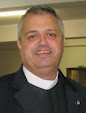
The Rev'd Dr. Russell Moore, President of the Ethics and Religious Life Commission of the Southern Baptist Convention spoke on Tuesday, 18 June, to the 2019 Assembly of the Anglican Church in North America. I wasn't thrilled when I learned that he was scheduled to speak -- although I had at one time been a fan of Dr. Moore's some of his advocacy of social justice has been of serious concern, and not only for me but for many of my Southern Baptist friends -- and following his approbation for Resolution 9 which stated that Critical Race Theory and Intersectionality, concepts that had their roots in radical feminism and have been adopted by cultural Marxists, could, under the authority of Scripture serve as useful analytical tools, at last week's Southern Baptist Convention thought the he should be disinvited and stated so. I didn't really think that would happen, but still find question his participation and the imprimatur that his speaking appeared to give. I determined that I would listen to his remarks (which can be found here at 53:10) and so these are my thoughts.
I will say at the outset that there wasn't a whole lot in this address that I could disagree with. While he has been a vociferous and untiring critic of Donald Trump (an area which, in the interest of full disclosure, I largely agreed with him in 2016) he made no mention of the President. He criticized the notion that Christianity could be a "hood ornament" to Southern or Mid-Western culture and I would agree with him that if it is only that then that is largely problematic. At the same time, I would caution against too greatly depreciating the effects that Christianity formerly had on those cultures (as Flannery O'Connor pointed out the South is "Christ haunted") -- however imperfect. He noted that the notion, largely prevalent in society that one need be at least nominally associated with a church to be a good person, is passing away due to increasing secularism. He is correct. I remember asking an Englishwoman who had relocated to South Carolina from California in 1981 what church she attended and being somewhat surprised when she said that she didn't; in my work as a hospice chaplain I regularly meet new people and in the course of my conversation ask them about their religious affiliation and increasingly note that they answer the same way that she did so many years ago.
He rightly noted that secularism can present opportunities for the Church to present a unique message to the culture and cautioned against being co-opted by either poltical party, telling a story of seeing a truck with a bumper sticker that read "If Jesus had a gun he'd still be alive today." I am an life member of the NRA, have a Concealed Weapons Permit, enjoy shooting, and am a passionate advocate of the Second Amendment but I find that sticker stupid and fairly blasphemous. He also noted that it would be an error to use the Church to advocate the opposing view as well, although that happens far more frequently.
Somewhat out of nowhere he mentioned that the Church should be the kind of place where a person with Down Syndrome is treated not a a charity case but a valuable part of the body. I couldn't agree more. For 2 1/2 years while I was in seminary I served as the Student Supply (more or less the de facto minister, although not yet being ordained I had to bring in clergy for baptisms [we had some] and Holy Communion) at Waccamaw Presbyterian Church in Bucksport, South Carolina. One of the people that joined that small rural church (and I seem to recall him being baptized there) was a young man with Down Syndrome named Alvie. Alvie enjoyed ushering and so he did exactly that and did so with enthusiasm. During my time there the decision was made to clear out and repair the educational building and use it for that purpose and as a parish hall. One day the Clerk of Session (kind of the Senior Warden in Anglican parlance) walked in to find Alvie sanding the floorboards and when he asked him what he was doing Alvie responded that he was "working for Jesus." His simple but very real faith was an inspiration to the rest of us and I am thankful for it. Furthermore, inasmuch as I have often said that my philosophy of ministry is that as a cleric I am essentially a coach whose job it is to develop and enable the flock to minister as God has gifted them that certainly includes the handicapped.
Moore's call to live out an authentic Christianity in the midst of a secularizing culture was a valid one. As I mentioned, there is little in this address with which I can disagree.
I still have serious concerns about Russell Moore, his adoption of the social justice agenda, and his approbation for a seriously flawed resolution and still wonder why my Province feels the need to cozy up to Big Eva. Whether that continues remains to be seen.
Showing posts with label Christian Worldview. Show all posts
Showing posts with label Christian Worldview. Show all posts
Wednesday, June 19, 2019

Thursday, March 19, 2015
On the PC(USA) and Ammendment 14f
Although I've been an Anglican since my entry into the Reformed Episcopal Church, in which I was ordained deacon in 2001 and priest in 2003, I was born and baptized into and joined the Presbyterian Church in the United States, the old "Southern Presbyterian Church" which ceased to exist in 1983 when it participated in the merger that resulted in the creation of the Presbyterian Church (U.S.A.) . At least one line of my family tree has Presbyterian roots going back directly to Scotland with a number of other ancestors having stopped off in Ulster before coming to the New World. My great-great-great-great-great-great-grandfather, John Makemie Wilson, was a scrappy Scotch-Irish kid from the Waxhaws (he had a boyhood friend named Andy Jackson you may have heard of) who entered the Presbyterian ministry and served as the Minister of Rocky River Presbyterian Church in Concord, North Carolina, for 30 years, where he also had a classical school where he taught some of the men who went on to found Davidson College; he and his wife had several sons enter the ministry including one who perished as a medical missionary. When to no one's surprise more than my own I began to discern a call to the ordained ministry I took the initial steps to do so in the Presbytery of New Harmony with the intention of attending Columbia Theological Seminary because, well, that's where the Presbyterian ministers whom I knew had pretty much gone -- I knew I'd tend toward the evangelical wing of the PC(USA) but honestly, with all of the vigor of an early twentysomething with a sense of vocation figured that things could be turned around, something that an interview with the then-admissions officer made pretty clear wasn't welcome (it was pretty much made clear that she'd rather not have my kind there) and resulted in my departure for the Associate Reformed Presbyterians and going to Erskine Theological Seminary instead. Despite not being a member of the PC(USA) since 1993 and not even being a Presbyterian any more I follow events there because many of my family and quite a few friends still in that body.
For that reason I was disappointed but not surprised when I learned that sufficient presbyteries had ratified Amendment 14f to their Book of Order which neutralized the definition of marriage to allow for same-sex unions. I had known it was coming as they trends were clear that that portion of the Church was following cultural trends rather than being grounded in Scripture and Sacred Tradition in standing against the culture (something that was made clear in a local news story where the Rev'd Deane Kemper, Stated Clerk of Charleston-Atlantic Presbytery, commented that the church had to follow the state in how it conducted marriage ceremonies and used a very simplistic example drawn from the Latter Day Saints' abandonment of polygamy in order to gain Utah's statehood [in point to fact some "Mormons," the term that Kemper used retained the practice]). The Church is called to bear witness to culture and transform it through the preaching of the Word, evangelism, discipleship, and works of charity, it is not called upon to follow the whims of culture and when it has done so the results have been negative.
I suspect that many in the leadership of the PC(USA) have vastly underestimated the fallout that they will experience from this. Although my father was raised in the Presbyterian Church he is only an occasional attender and doesn't really follow church news, When I spoke with him today he brought it up and noted that he might withhold any contributions from his own congregation as a result -- if he is sitting up and taking notice then I'm sure others are as well and with the recent South Carolina court decision regarding the ownership of property in The Episcopal Church (about which I wrote here), South Carolina presbyteries may find that they no longer can intimidate those congregations seeking to depart. Look for more conservative Presbyterian bodies like the Presbyterian Church in America, the Associate Reformed Presbyterian Church, the Orthodox Presbyterian Church, and especially two options that allow for women officers (a practice long accepted in the PC[USA] and entrenched in most congregations at this point) -- the Evangelical Presbyterian Church and the Covenant Order of Evangelical Presbyterians to make substantial gains in light of this.
Decisive times are no doubt ahead.
For that reason I was disappointed but not surprised when I learned that sufficient presbyteries had ratified Amendment 14f to their Book of Order which neutralized the definition of marriage to allow for same-sex unions. I had known it was coming as they trends were clear that that portion of the Church was following cultural trends rather than being grounded in Scripture and Sacred Tradition in standing against the culture (something that was made clear in a local news story where the Rev'd Deane Kemper, Stated Clerk of Charleston-Atlantic Presbytery, commented that the church had to follow the state in how it conducted marriage ceremonies and used a very simplistic example drawn from the Latter Day Saints' abandonment of polygamy in order to gain Utah's statehood [in point to fact some "Mormons," the term that Kemper used retained the practice]). The Church is called to bear witness to culture and transform it through the preaching of the Word, evangelism, discipleship, and works of charity, it is not called upon to follow the whims of culture and when it has done so the results have been negative.
I suspect that many in the leadership of the PC(USA) have vastly underestimated the fallout that they will experience from this. Although my father was raised in the Presbyterian Church he is only an occasional attender and doesn't really follow church news, When I spoke with him today he brought it up and noted that he might withhold any contributions from his own congregation as a result -- if he is sitting up and taking notice then I'm sure others are as well and with the recent South Carolina court decision regarding the ownership of property in The Episcopal Church (about which I wrote here), South Carolina presbyteries may find that they no longer can intimidate those congregations seeking to depart. Look for more conservative Presbyterian bodies like the Presbyterian Church in America, the Associate Reformed Presbyterian Church, the Orthodox Presbyterian Church, and especially two options that allow for women officers (a practice long accepted in the PC[USA] and entrenched in most congregations at this point) -- the Evangelical Presbyterian Church and the Covenant Order of Evangelical Presbyterians to make substantial gains in light of this.
Decisive times are no doubt ahead.
Wednesday, April 18, 2012
Chuck Colson and Me
When I prayed the evening office tonight I remembered Charles Colson, in extremis, for reports have been received that Colson -- better known to many as "Chuck" -- is near death after having fallen ill several weeks ago and undergoing emergency surgery for a blood clot. I owe him a debt of gratitude on a number of counts.
I was raised in a nominal Christian family in a nice respectable church that, quite frankly, didn't talk much about my sinfulness or need for redemption, but I did spend a good deal of time at the now-demolished Myrtle Square Mall because Collins Department Store, owned by the family and (in the case of that one) managed by my dad (it's gone now too -- we sold them in 1981). We'd go there shopping and I was let loose to roam at a fairly early age. The Word, a Christian Bookstore located right by Sears (people of a certain age who were raised in Myrtle Beach, South Carolina, will know exactly where I'm talking about) was owned and operated by the Herdons, good folk whom I knew from church, and sold (among other things) Spire Christian Comics. They were simplistic but actually conveyed the stories that they intended to tell pretty well and one of them was an adaptation of Chuck Colson's autobiography, Born Again. While it wasn't high art it was the first time that I can remember hearing of my need for a saviour and the concept of new birth in Christ. I later read the book and saw the movie, but that comic book was the first clear presentation of the Gospel that I can remember and was used to bring me to faith in Christ. Really.
Some years later, after commissioning and while still in college, I began considering a vocation to ordained ministry and read a number of Colson's books including The Body. While not a scholarly tome it did impact how I viewed the Church and its mission in the world -- the first ecclesiology I read. It was through his works that I first learned of a Christian world and life view, and for that I'm very thankful; his thoughtful Breakpoint commentaries fleshed that out. Charles Colson was also one of the leaders in the Manhattan Declaration, a great statement of Christian conscience of which I was pleased to be the 4177th signer (if you've not done so I encourage you to sign it as well) and continued to promote Christian engagement with culture -- all of this, in addition to his primary work reaching men and women in prison with the Gospel of Jesus Christ.
In 1997 I got to hear Colson in person at the dedication of Reformed Theological Seminary's Charlotte Campus and I regret that I didn't meet him that night (the crowds were considerable). Barring the miraculous, I probably won't get a chance to thank him in person in this life but want to take this opportunity to express my appreciation for the impact that he's had on my life and the Church of Christ at large.
I was raised in a nominal Christian family in a nice respectable church that, quite frankly, didn't talk much about my sinfulness or need for redemption, but I did spend a good deal of time at the now-demolished Myrtle Square Mall because Collins Department Store, owned by the family and (in the case of that one) managed by my dad (it's gone now too -- we sold them in 1981). We'd go there shopping and I was let loose to roam at a fairly early age. The Word, a Christian Bookstore located right by Sears (people of a certain age who were raised in Myrtle Beach, South Carolina, will know exactly where I'm talking about) was owned and operated by the Herdons, good folk whom I knew from church, and sold (among other things) Spire Christian Comics. They were simplistic but actually conveyed the stories that they intended to tell pretty well and one of them was an adaptation of Chuck Colson's autobiography, Born Again. While it wasn't high art it was the first time that I can remember hearing of my need for a saviour and the concept of new birth in Christ. I later read the book and saw the movie, but that comic book was the first clear presentation of the Gospel that I can remember and was used to bring me to faith in Christ. Really.
Some years later, after commissioning and while still in college, I began considering a vocation to ordained ministry and read a number of Colson's books including The Body. While not a scholarly tome it did impact how I viewed the Church and its mission in the world -- the first ecclesiology I read. It was through his works that I first learned of a Christian world and life view, and for that I'm very thankful; his thoughtful Breakpoint commentaries fleshed that out. Charles Colson was also one of the leaders in the Manhattan Declaration, a great statement of Christian conscience of which I was pleased to be the 4177th signer (if you've not done so I encourage you to sign it as well) and continued to promote Christian engagement with culture -- all of this, in addition to his primary work reaching men and women in prison with the Gospel of Jesus Christ.
In 1997 I got to hear Colson in person at the dedication of Reformed Theological Seminary's Charlotte Campus and I regret that I didn't meet him that night (the crowds were considerable). Barring the miraculous, I probably won't get a chance to thank him in person in this life but want to take this opportunity to express my appreciation for the impact that he's had on my life and the Church of Christ at large.
Monday, February 14, 2011
Guest Post: The Baltimore Declaration of 1991
Some 20 years ago my friend William McKeachie and five other Episcopal priests then canonically resident in the Diocese of Maryland produced the Baltimore Declaration, an affirmation of orthodox Christianity. The articles of faith affirmed therein remain relevant for the Church and Christ's Church continues to struggle with those who would attack the faith; it bears re-reading. Inasmuch as the sites where it was formerly available no longer are, it is presented in its entirety here. Tolle Lege! -- DC+
The Baltimore Declaration
1991
The Rev. Ronald S. Fisher
The Rev. Alvin F. Kimel, Jr.*
The Rev. R. Gary Matthewes-Green**
The Rev. William N. McKeachie
The Rev. Frederick J. Ramsay
The Rev. Philip Burwell Roulette
*Fr. Kimel has since entered the Roman Catholic Church and been ordained to the priesthood in the same.
**Fr. Matthewes-Green has since entered the Antiochian Orthodox Church and is now the Pastor of Holy Cross Antiochian Orthodox Church in Linthicum, Maryland.
The Baltimore Declaration
1991
Throughout the history of the Christian Church, there have been times when the integrity and substance of the Gospel have come under powerful cultural, philosophical, and religious attack. At such times, it has been necessary for Christian believers, and especially for pastors and preachers, to confess clearly, unequivocally, and publicly "the faith which was once for all delivered to the saints" (Jude 3), and to define this faith over against the heresies and theological errors infiltrating the Church. Thus the Church is led into a deeper comprehension of the Gospel of Jesus Christ and the communal identity of the Church is strengthened in its mission to the world.
We, the undersigned, who are baptized members of the Episcopal Church of the United States, believe that such a time has now come upon the Church which we serve. We are now witnessing a thoroughgoing revision of the faith inconsistent with the evangelical, apostolic and catholic witness, a revision increasingly embraced by ecclesiastical leaders, both ordained and lay. In the name of inclusivity and pluralism, we are presented with a new theological paradigm which rejects, explicitly or implicitly, the doctrinal norms of the historic creeds and ecumenical councils, and which seeks to relativize, if not abolish, the formative and evangelical authority of the Holy Scriptures. This paradigm introduces into the Church a new story, a new language, a new grammar. The "revelations" of modernity, infinitely self-generating and neverending, supplant and critique that historic revelation which God the Holy Trinity has communicated by word and deed in the life, death, and resurrection of Jesus the Israelite.
Fully aware of our own sinfulness, as well as the spiritual dangers inherent in issuing such a call, we humbly and prayerfully summon the Church to return to and remain steadfast in that Gospel entrusted to it by the Apostles of Jesus Christ. We also summon the clergy of the Church to stand up boldly and declare that Trinitarian faith which they have sworn at their ordinations to uphold and preach. We are well aware of the possible personal and professional costs of such a confession in the present situation; but we are convinced that the integrity and substance of the Gospel, that Gospel which is the only hope and salvation of the world, are at stake. The Lord is calling us to fidelity to him and to him alone.
We offer, therefore, the following Declaration of Faith. This is not a comprehensive confession. It addresses those critical theological issues which we believe to be at the heart of the present crisis.
- "All authority in heaven and on earth has been given to me. Go therefore and make disciples of all nations, baptizing them in the name of the Father and of the Son and of the Holy Spirit, and teaching them to obey everything that I have commanded you" (Matt. 28:18-20).
By the command and mandate of her risen Lord, the Church of Jesus Christ is commissioned to baptize disciples into the revealed name of God: Father, Son, and Holy Spirit. This proper name faithfully identifies the Savior and Lord of the Holy Scriptures. While human linguistic formulae cannot exhaust the mystery of the ineffable Deity, the threefold appellation - given to us in the resurrection of Jesus - truly names and designates the three Persons of the Holy Trinity as disclosed in the biblical narrative, and summarizes the apostolic experience of God in Christ. To reject, disregard, or marginalize the Trinitarian naming is to cut ourselves off from that story which shapes and defines the identity of the Church; ultimately, it is to cut ourselves off from the God of Israel himself. The confession of the triune name is required in the celebration of Christian baptism, and it properly structures the liturgy and prayer of the Christian community: We rightly pray to the Father, through the Son, in the Holy Spirit. As St. Basil the Great declared: "For we are bound to be baptized in the terms we have received and to profess belief in the terms in which we are baptized, and as we have professed belief in, so to give glory to Father, Son, and Holy Spirit."
We repudiate the false teaching that God has not definitively and uniquely named himself in Jesus Christ, that we are free to ignore or suppress the revealed name of Father, Son, and Holy Spirit and worship the Deity with names and images created by our fallen imaginations or supplied by secular culture, unreformed by the Gospel and the biblical revelation.
- "In the beginning when God created the heavens and the earth, the earth was a formless void and darkness covered the face of the deep, while a wind from God swept over the face of the waters. Then God said. . ." (Gen. 1: I-3).
"Long ago you laid the foundation of the earth, and the heavens are the work of your hands. They will perish, but you endure; they will all wear out like a garment. You change them like clothing, and they pass away, but you are the same, and your years have no end" (Ps. 102: 25-27).
The triune God is the holy creator who freely speaks the universe into contingent existence out of nothing (creatio ex nihilo). He is the sovereign Lord, utterly transcending his creation, yet actively immanent within it, guiding and directing it to its eschatological fulfillment in the Kingdom. As creator, God is free to act within his universe, both providentially and miraculously, to accomplish his purposes and ends.
We repudiate the false teaching of monism, which indissolubly unites deity and cosmos into an interdependent whole, the world being construed as God's body, born of the substance of deity, and thus divine. On the other hand, we repudiate the false teaching of deism, which distances the creator from active involvement in the preservation, redemption, and consummation of his creation.
- In the beginning was the Word, and the Word was with God, and the Word was God. He was in the beginning with God. All things came into being through him, and without him not one thing came into being. What has come into being in him was life, and the life was the light of all people... . And the Word became flesh and lived among us, and we have seen his glory, the glory of the Father's only Son, full of grace and truth. . . . From his fullness we have all received grace upon grace. The law indeed was given through Moses; grace and truth came through Jesus Christ. No one has ever seen God. It is God the only Son, who is close to the Father's heart, who has made him known" (John 1:1-4,14,16-18).
"All things have been handed over to me by my Father and no one knows the Son except the Father, and no one knows the Father except the Son and anyone to whom the Son chooses to reveal him" (Matt. 11:27).
Jesus of Nazareth is God. He is the Word made flesh, the incarnation and embodiment of the divine Son, truly God and truly human, "of one being" (homoousios) with the Father and the Spirit. In this wondrous union of deity and humanity, the triune God is perfectly and definitively revealed. In Christ, and in him alone, we are freely given true apprehension of God in his immanent reality, freely given to share in the Son's knowledge of the Father in the Holy Spirit. The crucified and risen Lord, in all of his historical particularity, is thus the source and foundation of our knowledge of the living God. We rejoice in the triune God's gift of himself in Jesus Christ, and declare Jesus as the eternal Word who judges all preachings, teachings, theologies, actions, prayers and rituals. We acknowledge that God is free to communicate himself in many and diverse ways to the peoples of the world; but we confess that saving and authentic knowledge of the Deity in his inner Trinitarian life is possible only in and through the incarnate Son, Jesus Christ, the God-man.
We repudiate the false teaching that Jesus Christ is only one revelation or manifestation of God, that there are other revelations and other experiences (political, ideological, cultural, or religious) to which we may look or must look to gain knowledge of the true God.
- "l am the way, and the truth, and the life. No one comes to the Father except through me" (John 14:6).
"This Jesus is the stone that was rejected by you, the builders; it has become the cornerstone. There is salvation in no one else, for there is no other name under heaven given among mortals by which we must be saved" (Acts 4:11-12).
By his incarnation in Jesus the Israelite, the eternal Son of God has assumed to himself our human nature, cleansing and healing it by the power of the Spirit, redeeming it from sin and death by the cross of Calvary, raising it to everlasting life in his resurrection, and incorporating it into the triune life of the Godhead by his ascension to the right hand of the Father. Thus this Jesus, who is called the Christ, is the Savior of the world, the one mediator between God and humanity, in whom, by faith, repentance and baptism, we find forgiveness, rebirth in the Spirit, and eternal life in the Kingdom. While we do not presume to judge how the all-holy and all-merciful God will or will not bring to salvation those who do not hear and believe the preached Gospel, we do emphatically declare Jesus the rightful Lord and Savior of all humanity, and we embrace the Great Commission of our Lord to proclaim with evangelical fervor his Good News to the world. To deny this historic conviction in the absolute lordship of Christ Jesus and his exclusive mediation of salvation is to eviscerate the heart and vitality of the Church's evangelistic mission.
We repudiate the false teaching that the salvation of humanity by the sovereign action and grace of God is unnecessary or that salvation may be ultimately found apart from the atoning death and resurrection of Jesus Christ. We repudiate the false teaching that Jesus is merely one savior among many - the savior of Christians but not of humankind.
- "The hour is coming when you will worship the Father neither on this mountain nor in Jerusalem. You worship what you do not know; we worship what we know, for salvation is from the Jews. But the hour is coming, and is now here, when the true worshipers will worship the Father in spirit and truth, for the Father seeks such as these to worship him" (John 4:21-23).
"So that you may not claim to be wiser than you are, brothers and sisters, I want you to understand this mystery: a hardening has come upon part of Israel, until the full number of the Gentiles has come in. And so all Israel will be saved; ... As regards the gospel they are enemies of God for your sake; but as regards election they are beloved, for the sake of their ancestors; for the gifts and the calling of God are irrevocable. Just as you were once disobedient to God but have now received mercy because of their disobedience, so they have now been disobedient in order that, by the mercy shown to you, they too may now receive mercy. For God has imprisoned all in disobedience so that he may be merciful to all" (Romans 11:25-26, 28-32).
By the call of Abraham and the covenant of Moses enacted on Mount Sinai, the triune God has gathered to himself the people of Israel to be his holy nation and royal priesthood, consecrated to his service in the redemption of the world. To them he has entrusted his Torah, Wisdom, and prophetic Word. From this people God has brought forth his Messiah, born in Bethlehem of the Virgin Mary, Jesus the Jew, the son of David, who is the fulfillment of the promises of God to Israel and the Savior of humanity and of all creation. For these majestic reasons, the Jews are to be regarded by Christians as a reverend and blessed people. Following the teaching of the New Testament, we eagerly look forward to that time when Gentile and Jew will be fully reconciled and made one people in eternal communion with the crucified and risen Messiah in the New Jerusalem.
We repudiate the false teaching that the Jews may be persecuted by Christians and we especially repudiate the repugnant and fallacious charge of "Christ-killers," which has been used by Christians down the centuries as an excuse for hatred, bigotry, and violence against the Jews. All anti-Semitism in thought, word, or deed is vicious and is to be decried and condemned by Christians. But we also repudiate the false teaching that eternal salvation is already given to the chosen people of Israel through the covenant of Abraham and Moses, independently of the crucified Christ, and the inference that the Gospel of Jesus the Messiah need not be proclaimed to them.
- "But now, apart from the law, the righteousness of God has been disclosed and is attested by the law and the prophets, the righteousness of God through faith in Jesus Christ for all who believe. For there is no distinction, since all have sinned and fall short of the glory of God; they are now justified by his grace as a gift, through the redemption that is in Christ Jesus, whom God put forward as a sacrifice of atonement by his blood, effective through faith" (Romans 3:21-25).
"For by grace you have been saved through faith, and this is not your own doing; it is the gift of God - not the result of works, so that no one may boast" (Eph. 2:8-9).
The Gospel is the proclamation of the unconditional love, grace, mercy, and forgiveness of God the Father, mediated through Christ crucified, in the power of the Spirit. The Father nurtures, protects, and cares for his children like a nursing mother: he strengthens, directs, and disciplines them like a steadfast father. His love embraces all humankind equally, female and male, and is communicated to us in the preaching of the Word and the celebration of the sacraments, received by the faith granted us in the gift of the Gospel. This love cannot be earned nor bought: We are freely justified by the grace given to us through Christ in his sacrificial death and victorious resurrection, not by our religious, political, psychological, or moral works.
We repudiate the false teaching that God is male (except in the incarnate Christ) and that men are consequently superior to women, or that God has institutionalized in family, society, or the Church the authoritarian and sexist domination of women by men. We repudiate the false teaching that God the Father is the oppressor and subjugator of women, or that the divine Fatherhood is rightly construed as the psychological projection upon the Deity of the experience of human fatherhood. We therefore repudiate the false teaching that the Father of Jesus Christ is inaccessible or unavailable to contemporary women.
- "Do you think that I have come to abolish the law or the prophets: I have come not to abolish but to fulfill. For truly I tell you, until heaven and earth pass away, not one letter, not one stroke of a letter, will pass from the law until all is accomplished'" (Matt. 5:17-18).
Pray for the Church."All scripture is inspired by God and is useful for teaching, for reproof, for correction, and for training in righteousness, so that everyone who belongs to God may be proficient, equipped for every good work" (2 Tim. 3: 16-17).
We confess the Holy Scriptures of the Old and New Testaments to be the Word of God, and to contain all things necessary to salvation. The Holy Spirit, the ultimate author of God's Word written, was active both in the inspiration of the sinful human writers, redactors, and editors and in the process of canonization. Interpreted within the tradition and community of the Christian Church, with the use of responsible biblical criticism - always under the guidance and lordship of the Spirit - the Scriptures, in their entirety, are the reliable, trustworthy, and canonical witness to God's self-revelation in Jesus Christ, and are our primary and decisive authority in matters of faith and morals. Through the Holy Scriptures the Church hears anew every day that Word who frees us from the tyranny of the fashionable, the divine Word who renews and inspires, teaches and corrects, judges and saves.
We repudiate the false teaching that the plain testimony of the Holy Scriptures may, in whole or part, be supplanted by the images, views, philosophies, and values of secular culture. We repudiate the false teaching that only those sayings of the pre-resurrection Jesus which can be demonstrated to be certain or probable by historical criticism are authoritative for the life and mission of the Church. We repudiate the false teaching that the Old Testament is not to be interpreted in light of its messianic fulfillment in the person of Jesus Christ as witnessed in the New Testament, or that the Old and New Testaments stand hermeneutically, materially, and formally independent of each other.
The Rev. Ronald S. Fisher
The Rev. Alvin F. Kimel, Jr.*
The Rev. R. Gary Matthewes-Green**
The Rev. William N. McKeachie
The Rev. Frederick J. Ramsay
The Rev. Philip Burwell Roulette
*Fr. Kimel has since entered the Roman Catholic Church and been ordained to the priesthood in the same.
**Fr. Matthewes-Green has since entered the Antiochian Orthodox Church and is now the Pastor of Holy Cross Antiochian Orthodox Church in Linthicum, Maryland.
Tuesday, August 31, 2010
(A Couple More) Reflections on "Restoring Honor"
I have just got off of the phone with a friend with whom I've discussed the Restoring Honor rally in some detail. He's a Southern Baptist minister who agreed with me that Russell Moore's column was spot on. As we talked, I was reminded of a couple of things that built upon what I wrote last night:
1. When there was some discussion regarding Mitt Romney's Mormonism in 2008 I said at the time that I could vote for him if he got the nomination (I was a Fred Thompson backer from the beginning but when he dropped out after a lackadaisical campaign -- long after the South Carolina primary -- I hoped that Romney would be the candidate) because I was voting for my President, not my Bishop. It was, and is, a matter of sphere sovereignty; I could easily vote for a candidate whose positions were in line with a Christian worldview despite their having a heterodox theology over against a candidate with whom I was in theological agreement but whose politics were less than sound.
Ironic, then, that much of American Evangelicalism is ready to elevate Glenn Beck to something uncomfortably close to its episcopate.
2. I also recalled a conversation that I had years ago in college with a professor -- now deceased -- who leaned to the left both politically and ecclesiastically (a Southern Baptist, he was an early member of the Cooperative Baptist Fellowship and complained about what had become of his Alma mater, Southeastern Baptist Theological Seminary in the "Fundamentalist Takeover*"). I studied under him at a state university and, while our theological differences became more stark over the years, I learned much from him and counted him a friend until his death. As we were talking it came up that the Army curiously classifies LDS chaplains as "Protestant." He retorted, "I guess they don't have a category for 'cult!'"
Ironic that my liberal friend got what many of the Evangelicals in the United States seem to be missing!
*As an aside, when trying to determine the theological position of a Southern Baptist, a good indicator is to see how they refer to what happened in the late 1970s through the early 1990s. If it is called the "conservative resurgence" then they are reliably conservative/evangelical. If they call it the "Fundamentalist takeover" they are almost certainly a liberal. Another quick indicator is to casually work the name of Al Mohler into the conversation. If they get visibly angry, they're probably a liberal. If they smile, they're probably a conservative/evangelical, if they get puppy dog eyes, they're almost certainly of a Reformed stripe and are probably members of the Founder's Movement.
I hope all of my Southern Baptist friends know that the above was written in good natured fun, accurate though it may be!
Monday, August 30, 2010
Reflections on "Restoring Honor"
First of all, if you want to read the definitive reflections on the "Restoring Honor" rally, read the Rev'd Dr. Russell D. Moore's "God, the Gospel, and Glenn Beck." I can't improve on what Moore says and won't even try; I'm in essential agreement with his reflections.
I've been listening to Glenn Beck on and off since 2003 -- when he first aired on one of the local talk stations and have generally found him informative and entertaining. I have from time to time somewhat jokingly referred to him as "my favorite Mormon," and while I have never gone to one of his shows nor have I bought any of his books, I did consider purchasing one and taking it to be autographed when he made an appearance at the Barnes & Noble that is across the street from my office (the crowd was unbelievable and I didn't have the time or the inclination to endure it to see him). When he launched the 9-12 Project I gathered with some friends at a local bar for a viewing party (I've not been to any meetings since then so I'm hardly a "member," but I so share some of their concerns and have attended a couple of Tea Parties [not the same thing, but there is certainly some overlap there]). I have friends who were on the Mall on Saturday; most of them will probably disagree with my thoughts.
Mr. Beck is an unapologetic member of the Church of Jesus Christ of Latter Day Saints. It is certainly his right to belong to that sect, and my disagreements with it -- which are substantial -- don't prevent me from enjoying his show (they also wouldn't have prevented me from supporting his fellow-Mormon Mitt Romney [which I did for a time in 2008, after Fred Thompson had withdrawn from the race for the Republican Presidential nomination)]. Harry Reid being a notable exception, most of the Mormons that I have encountered have been very traditional, family oriented, and pro-life -- people with whom I naturally have much in common and with whom I'm happy to stand politically and socially.
Why, then, am I less than enthusiastic about Restoring Honor, an event that I actually considered attending? Sarah Palin, who made voting for the 2008 Republican Presidential ticket acceptable to me and of whom I continue to be a fan, was there, as was Alveda King, whom I heard speak eloquently and with conviction at a banquet for the Lowcountry Pregnancy Center here in Charleston several years ago. One would think that this would be my must-attend event of the summer, something to which I would flock like a moth to a flame. One would, it turns out, be mistaken.
Mr. Beck called for a renewed emphasis on family and faith -- with which I completely agree. "The Kingdom of God will not arrive on Air Force One" may or may not be original to Cal Thomas, whom I first heard say it in 1994, but it is completely true. If the Republic is to be preserved politics will indeed play a part, but it will be a bit part as hearts are turned to God and renewed individuals, families, and churches proclaim God's truth and live transformed lives. Again, shouldn't I be completely on board with Glenn Beck?
It turns out I can't be. Time and again I heard people -- Christians who are on the right side of the battles raging in their churches regarding doctrine and manner of life -- say that Glen Beck says what pastors don't have the guts to say and that what he says is what he need to hear in the churches. While some of that may be true (the cultural mandate is very real and Christians are called to declare the whole counsel of God), one can hardly be said to be doing so if one gets all of the family values messages right and then gets the uniqueness of Jesus Christ, the sufficiency of the Holy Scriptures, and the Holy Trinity wrong. Mr. Beck, as a faithful Mormon, gets all of these and more wrong -- despite how right his message may sound and despite how attractively it may be packaged, I cannot pretend that those issues are inconsequential. I do not claim to have watched all of the rally (I was in a class for most of it), but I do know that time and again Mr. Beck referred to himself as a Christian (he frequently does so on his radio program) and time and again speakers who hold to the historic Christian faith did so as well either directly or by implication.
Mr. Beck proclaims another faith. A faith that is similar to Christianity (therein lies much of the danger) but different on key points. As Dr. Moore so aptly points out, the problem is not with Glenn Beck, the problem is what it says about American Christianity. Dr. Moore writes, "It’s taken us a long time to get here, in this plummet from Francis Schaeffer to Glenn Beck" -- true indeed and very damning, as Glenn Beck couldn't be dubbed the leader of America's Christian Conservative movement with approbation from many of those Christian Conservatives unless there was a huge vacuum at the helm; there is, and his ascendancy to that spot indicates just how vivid it is.
Do I think Christians should be active in the pro-life movement? Absolutely! I have been and will continue to be so. Do I think that Christians should be active in the political process, seeking to apply their faith in the public square? You bet. Do I think that Christians should work with those of other faiths in the political sphere? Yes, if they can do so without compromise. But most certainly do not think that Christians should be willing to sacrifice the essentials of the faith in so doing. Katharine Jefferts Schori , John Shelby Spong, and others are rightly taken to task when they preach a liberal universalism that denies the uniqueness of the Gospel; a conservative universalism that does exactly the same thing is just as bad -- maybe even worse. If the Church wins the culture war but denies historic Christianity in so doing, it will be no victory at all.
Saturday, January 2, 2010
The Mosque on Main Street

Moncks Corner, South Carolina (population according to the 2000 census: 5,952) , the county seat of Berkeley County, is a fairly typical small Southern town, with a county courthouse, various governmental offices, shops and restaurants; its proximity to Lake Moultrie offers fishing, boating and similar recreation and it's only about 40 minutes from downtown Charleston and all that it offers. There is a nearby Trappist monastery (which wasn't established until 1949 and played no role in the naming of the town), various historical sites, and -- this being the South -- a variety of churches of various types (mostly Protestant, but there is an active Roman Catholic parish as well). There is also a Mosque on Main Street.
Although the South is frequently portrayed as monochromatically Protestant, that has never been completely the case. Large pockets of Roman Catholicism have existed and Roman Catholics have played significant roles in the history of Charleston and other areas; the Roman Catholic Church has experienced tremendous growth throughout the state recently. The American branch of Reform Judaism was founded in Charleston in 1824 and a significant community of Jews, with a large cemetery, existed in Williamsburg County, which borders Berkeley County. Religious diversity is nothing new on the landscape, but Moncks Corner is far less cosmopolitan that Charleston and the establishment of a Mosque on Main Street there is an interesting commentary on the changing religious scene.
Islam has arrived in the West -- a friend of mine visited England a couple of years ago and noted the striking absence of native English children and the seeming ubiquitousness of burka-clad women being trailed by strings of children -- and shows little signs of abatement. The Church ignores this at its own peril and, sadly much of the Church does just that, either through ignorance, political correctness, or fuzzy theology. The Church needs to be missional in its approach not only to Islam, but toward other religions and a culture that is increasingly secularized.
How can we do this? Several ideas:
Catechesis: Christians must be taught the basics of the faith and be able to articulate what they believe and why they believe it. This instruction needs to be intentional and systematic and also needs to be a lifelong process. Christians who are well instructed in the faith will not be easily swayed by other faiths and will be able to articulate their faith in the context of a culture that is increasingly hostile or at least indifferent to the Christian faith.
Evangelism: The Church needs to be bold and innovative in its outreach to those outside her walls and proclaim the Good News of Christ. We need to take seriously the Great Commission not only in far-off lands but also right down the street. The influx of non-Christian immigrants from around the world presents both challenges but also great opportunity as one can now do world missions without ever leaving home! An excellent example of this is the work of Urban Nations, a ministry of Messiah's Covenant Community Church in Brooklyn, New York; it was founded some years ago in response to the tremendous variety of nations located within the area. Through a variety of ministries including English as a Second Language classes (something in high demand among those wishing to acclimate themselves into American society) using the Bible as a text, they have been able to reach more than 60 nations with the Gospel without ever leaving Kings County!
Works of Mercy: This could easily be a subset of evangelism as it is a means of reaching out to those outside the Church; one must be careful, though, to avoid the frequent error of theological liberals in being so focused upon works of mercy that the Gospel is never preached. When those of other faiths are cared for by the Church, they will be more open to hearing what the Church proclaims.
Worldview Education: This is really a subset of Catechesis. When Christians are discipled in the faith then the ramifications of that faith need to be fleshed out in every facet of life. Christians need to be taught how the claims of Christ effect business, economics, ethics, politics, the arts, and every other area of life. As the late Rev'd Dr. Cornelius Van Til aptly observed:
The Bible is thought of as authoritative on everything of which it speaks. Moreover, it speaks of everything. We do not mean that it speaks of football games, of atoms, etc., directly, but we do mean that it speaks of everything either directly or by implication. It tells us not only of the Christ and his work, but it also tells us who God is and where the universe about us has come from. It tells us about theism as well as about Christianity. It gives us a philosophy of history as well as history. Moreover, the information on these subjects is woven into an inextricable whole. It is only if you reject the Bible as the word of God that you can separate the so-called religious and moral instructions of the Bible from what it says, e.g., about the physical universe.
Christians who know why they believe what they believe, are active in outreach to those outside their walls, and who are actively applying their faith to all of life will be well equipped to meet the challenges of Islam, secularism, and whatever else may come in the future. Hopefully the Church will actively seek to meet these challenges for God's glory!
Subscribe to:
Posts (Atom)